

Make: TAYLOR
Model: TXH350L
Year: 2016


Make: Manitou
Model: 48" Forks
Year: 2012

Make: JLG
Model: Truss Jib 12'
Year: 2011

Make: Capacity
Model: TJ5000 DOT
Year: 2010

Make: JLG
Model: 450AJ
Year: 2016

Make: FrostFighter
Model: IDF350
Year: 2015
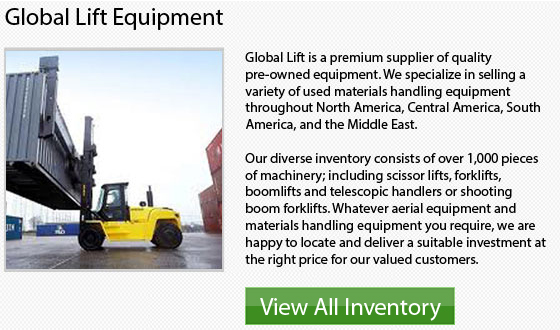
Caterpillar IC Forklifts Arlington
In choosing the correct Forklift Tire and Compound, the following factors must be taken into account: kind of fuel used; weight of your typical load; length of your standard run; kinds of issues you are having; type of surfaces the forklift runs on; whether or not your forklift operates over dock plates; percentage of time and number of shifts the forklift is loaded; and the normal speed and the top speed of your forklift
To describe various attributes of tires, there are some particular terms that are utilized. It can help to know what they mean. The term Durometer refers to the hardness of forklift tires. The range is usually from 83 to 95, the number increasing with the hardness of the tire. The majority of the tires manufactured these days fall within a couple of standard industry classifications.
Softer tires offer the driver a more comfortable ride. They are recommended for operations which need regular maneuvering because they offer better traction. They are can better tolerate driving over floor debris. For applications that need long runs and maximum speed, soft tires are not suggested. They are made of softer compounds that tend to heat up and wear faster than hard tires.
Harder tires are suitable for use needing multiple shifts, long runs and high speeds. They are better than soft tires for maximum loads, and they would wear better and last longer. Hard tires are less forgiving of floor debris and give a less comfortable ride. They tend to be more energy efficient as they provide less resistance.
Universal Compound tires combine advantages and are suggested as all-around tires for general applications.
- MEC Scissor Lifts Arlington
Safety Requirements for Scissor Lifts Scissor lift machinery are known as "moveable scaffolds," according to the OSHA. These industrial machines are capable of lifting heavy and large loads that are balanced well. They are responsible... More - Doosan Dual Fuel Forklifts Arlington
Basic Training Information for LPG Liquid petroleum gas or LPG is a odorless and colorless fuel derived from natural gas. LPG consists of 90% propane. It is extracted in a process referred to as distilling.... More - Mitsubishi Counterbalance Forklifts Arlington
Unfortunately, industrial accidents and injuries at construction sites are extremely common and occur more often than anybody would prefer. According to statistics, a huge majority of these mishaps occur because of inadequate or wholly absent... More - Taylor Reach Stackers Arlington
TS Series Reach Stackers Taylor has set a new standard with their newest reach stacker container handlers. Their newest TS-9972 Reach Stacker is a user friendly, really comfortable and durable machinery. The TS-9972 has all... More - Wolff Tower Cranes Arlington
During 1861, the company Harland and Wolff was formed. Mr. Gustav Wilhelm Wolff, born in Hamburg in 1834, along with Mr. Edward James Harland born during 1831, formed the business. In 1858 Harland, who was... More